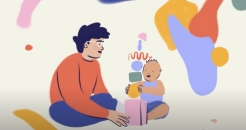
 The Centre for Early Childhood Explainer Series
From a series of short videos by The Centre for Early Childhood
The Centre for Early Childhood have published The Explainer Series - a series of short animated films explaining brain development in early childhood, and how interactions between babies, young children and caring adults can make a positive difference to their social and emotional development.
The Explainers have been designed to be used by people who work with babies, children and families, so that they are better equipped to have meaningful and consistent conversations with parents and carers about social and emotional development.
The Centre hopes these films will be a useful tool in encouraging more nurturing adult-child interactions.
The package for the Explainer series includes a guidance document to support practitioners to use the films as part of empowering and compassionate conversations with parents and caregivers, as well as accompanying scientific briefings for each animation, which gives more information about the science behind the key concept in the film.
There are six films in the series, which show how everyday actions support the development of children in their earliest years:
-
How we grow an emotionally healthy brain. This film explains describes the rapid development that happens in early childhood. It explains how early relationships, surroundings and experiences shape development and can have lasting effects throughout life.
-
Noticing and navigating feelings. This film unpacks a concept called attunement. In attuned conversations, adults notice a child’s emotional state, name what they are feeling and help them to manage these feelings. The film also describes other ways adults can talk to babies and young children about emotions and how this supports development.
-
Managing big feelings together. This film explains a concept called co-regulation. Co-regulation involves supporting another person when managing big feelings and returning to a state of calm. When adults co-regulate children, they help a child deal with positive or negative feelings that might otherwise be overwhelming. This enables the child to return to a state where they can think clearly, feel safe and respond to the world around them in helpful ways.
-
Back and forth interactions. This film unpacks a concept called contingent responsiveness (also known as serve and return). Contingent responsiveness is what happens when an adult notices a baby or child’s cue or signal and responds in a way that is sensitive and appropriate. This is a central part of nurturing care.
-
Supporting early learning. This film explains a concept called scaffolding. Scaffolding occurs when adults support children’s learning by helping them to do something for themselves, adjusting the level of guidance and support provided, led by the child’s needs and abilities. This supports the child in mastering new skills.
-
Creating space for connection. This film explains a concept called pacing. When we pace our interactions with children, we adjust our tempo and slow down to help them to process information and respond. Pacing creates space and time for meaningful connection, giving the child greater opportunity to engage positively in an interaction or activity.
Prior to their launch, more than 25 organisations agreed to support their practitioners in using the films in their work, from sharing them with their networks to embedding the films in their training programmes. There has been lots of positive feedback from the sector and more organisations are fully utilising the animations package.
See the Explainer Series including guides here.
Retweet about this article:
From a series of short videos by The Centre for Ea, 28/01/2026