 Rewilding civic life: Can we cultivate social capital?
From a report by Local Trust
The early 21st century has seen growing concern about the erosion of social capital - defined as the networks, norms, and trust that enable collective action. Social capital is crucial for economic prospects, happiness, and life expectancy. However, it is intangible and organic, making it difficult to restore through traditional policy levers.
The rise of bureaucracy in the 19th and 20th centuries to standardise and professionalise government was seen as a way to tackle technical societal problems - such as sanitation, health, and unemployment, by creating consistent, large-scale institutions staffed by professionals. This led to a model where central government devised policy and local institutions delivered services, with strict funding specifications and reporting requirements.
However, in the bureaucratic model, civic life is often relegated to a supporting role: civil society organisations might conduct research, lobby for policy changes, or deliver services under contract, but they tend to adopt bureaucratic forms themselves. Over time, this has led to a marginalisation of more organic, community-led approaches.
Limitations of bureaucracy’s ability to address complex, human-centred challenges include:
-
Inflexibility and Top-Down Control: Bureaucratic systems are designed for consistency and control, which can stifle local initiative and responsiveness. Funding comes with strings attached, and reporting requirements can be onerous and disconnected from local realities.
-
Transactional and Symptom-Focused: Bureaucratic approaches tend to treat symptoms rather than underlying causes, focusing on measurable outputs (e.g., number of appointments) rather than holistic outcomes (e.g., community wellbeing).
-
Late and Fragmented Intervention: Public services often intervene only at crisis points, leading to inefficiency and duplication. Multiple disconnected interventions can create confusion and even worsen outcomes.
-
Loss of Local Knowledge: Bureaucratic systems struggle to retain and use contextual knowledge about individuals and places, often “rediscovering” information that communities already possess.
A “civic” approach centres on the capacities of communities and civic life. This approach is more organic, enabling local people to collaborate, care for each other, and own civic spaces. The civic model values relationships, trust, and local agency, and is seen as better suited to addressing complex social challenges.
A Report by Local Trust explores whether and how social capital can be cultivated, using the Big Local programme as a case study. Big Local was launched in 2010 by the Big Lottery Fund (now the National Lottery Community Fund), providing £1.15 million to each of 150 deprived communities in England, with minimal restrictions. The aim was to empower local people to decide how to use the funds, fostering long-term, organic growth in civic capacity rather than delivering predefined outcomes.
The programme’s philosophy contrasted sharply with the bureaucratic model. Instead, Big Local prioritised community leadership, long-term commitment, and flexibility, allowing communities to learn, adapt, and build their own governance structures. Communities used their funding in diverse ways, reflecting local priorities. Common themes included:
-
Community events and gatherings
-
Financial advice and support
-
Investment in community spaces (buildings, parks, gardens)
-
Health and wellbeing activities
-
Youth programmes
-
Small grants for local initiatives
The Report synthesises over 100 research studies and finds that Big Local did reactivate civic life in many areas. Participants reported increased agency, confidence, and empowerment. There were also measurable improvements in mental health, reductions in burglary rates, and some evidence of reduced anxiety and increased life satisfaction, though population-level effects were modest.
Importantly, the programme’s impact was not just in outcomes but in process: it built civic capacity, enabling communities to sustain and grow their own initiatives. The financial return was positive, with one study estimating a cost-benefit ratio of 1:1.3, even under conservative assumptions.
The benefits of Big Local were not evenly distributed. Those with higher socio-economic status and men reported greater improvements in wellbeing. Some volunteers experienced stress and burnout, and external agencies sometimes imposed bureaucratic hurdles. Delays and conflicts occasionally arose due to the organic, locally-driven approach. External factors, such as austerity and the Covid-19 pandemic, also limited effectiveness.
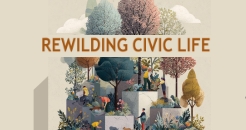
The authors liken civic renewal to environmental rewilding: both involve creating the conditions for organic, locally-rooted processes to flourish. They identify three phases in successful civic renewal:
-
Protecting Space: Carving out protected, long-term space for communities to act, free from overbearing control.
-
The Community Instinct: Enabling holistic, relational, resourceful, positive, and preventative action that reflects local needs and strengths.
-
Deepening and Spreading: Codifying and sharing learning, building networks, and scaling up through locally relevant adaptation.
The report argues that the civic approach is not only more human but can also be more cost-effective than bureaucratic methods, especially for complex social challenges. The key is to invest in community capacity, trust local leadership, and avoid imposing rigid structures. Success depends on humility, long-term commitment, and a willingness to let communities lead.
Big Local demonstrates that it is possible to revive civic life and social capital, but the process is organic, context-dependent, and requires patience.
Read the full report here.
Retweet about this article:
From a report by Local Trust, 17/03/2026