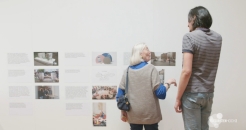
 Combating loneliness with culture buddies
From an article by Reasons to be Cheerful
What if a ticket to the theatre could also be a prescription against loneliness? In Hamburg, the non-profit, KulturistenHochZwei - a play on the words culture (kultur) and tourists (touristen) - is turning concert and museum visits into powerful social medicine.
Founded in 2015 by Christine Worch, a former marketing executive who left her career to care for her father with dementia, the initiative pairs teenagers with older adults to attend cultural events - everything from symphony performances to plays and art exhibitions. For the seniors, many of whom live on limited incomes and might otherwise stay home alone, these shared outings are a way back into public life.
“I’d been immersed in my career when my mother died and my father became ill,” Christine Worch recalls. “When I saw how isolation accelerated his decline, I realized how important social contact and culture are for older people, and how fragile those connections can be.” She began volunteering to bring art experiences to low-income seniors. One woman she visited told her, “That’s nice, dear, but I’ve got no one to go with.” That comment, Christine says, “was the spark.”
A year later, she registered KulturistenHochZwei as a nonprofit company. What started with a few pilot outings is now a citywide network that has facilitated more than 6,000 cultural visits and has inspired similar programs in other German cities.
Seniors who fall below an income threshold receive free tickets to cultural events. But instead of attending alone, they’re matched with a “culture buddy” aged 16 or older, recruited through partnerships with local schools. For the young volunteers, the outings are a crash course in empathy and human connection. The teenagers commit to at least three cultural outings per school year and receive a certificate for their volunteer service. Before their first event, they attend a five-hour training session.
The tickets are free for both the senior and the student, thanks to partnerships with about 50 local cultural institutions and donors. But what the participants - both seniors and their culture buddy - gain can’t be measured in euros.
The organization’s funding rests on four pillars: roughly 20% to 25% from government agencies, and the rest comes from contributions from private foundations and philanthropists, corporate sponsorships, and grassroots fundraising. But its greatest capital may be human connection.
For many participants, the outings reshape how they see each other and the generations they come from. Roughly 70% of students complete the required three outings per year, while 20 percent volunteer far more often.
The idea is adaptable anywhere that has culture, youth, and seniors — which is everywhere.
The idea that culture can improve health isn’t new, but initiatives like KulturistenHochZwei make it tangible. In 2023, the World Health Organization published evidence linking cultural participation to lower depression rates, better cognition and even longer life expectancy. In that light, KulturistenHochZwei looks less like a non-profit and more like a preventive health programme.
Read the full article here.
Retweet about this article:
From an article by Reasons to be Cheerful, 14/04/2026