 How we actually make decisions
From an article by Behavioral Scientist
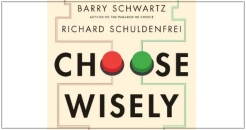
Barry Schwartz, Emeritus Professor of Social Theory and Social Action, is co-author of Choose Wisely. In this book, the authors offer a different way to think about the choices we make every day. Drawing from economics, psychology, and philosophy, they show how the focus on rationality (rational choice theory), fails to fully describe how we think about our decisions, much less help us make better ones.
In this article, Barry uses a simple scenario - deciding how to spend a free Saturday - to illustrate why rational choice theory fails to capture how people actually make decisions, and why a richer, more reflective model of judgment is needed. Here is a summary:
A person wakes up to a completely free day. With no obligations, they begin considering options: hiking, gardening, relaxing, watching sports, reading, catching up on news, or doing nothing at all. Each option quickly becomes complicated. Hiking sounds appealing but might be exhausting; gardening is productive but tiring; watching TV feels wasteful; reading may lead to napping and guilt. The abundance of choice becomes overwhelming.
Barry highlights that
freedom does not simplify decisions—it often makes them harder. This echoes his earlier work
The Paradox of Choice, where more options increase anxiety rather than satisfaction.
The decision-making process becomes even more complex when the person shifts from thinking about a “me day” to a “we day.” Should they help their daughter pack for a move? Visit their lonely mother? Or perhaps devote time to a social justice organisation they care about? Each choice involves emotional considerations, moral obligations, and questions about who needs them most.
Then comes an even deeper layer:
Should the day be framed in the short term or the long term? Maybe the day should be used for life reflection- evaluating career direction, relationships, personal values, and the kind of person one wants to become. This reframing changes the entire decision landscape. Instead of choosing between activities, the person is choosing between
ways of being.
He argues that
framing - deciding what kind of decision you’re making - is central to real-world decision-making. Rational choice theory treats framing as a bias or obstacle, but Barry insists it is essential. How you frame a decision determines which options even appear on the table.
He contrasts two approaches:
1. Rational Choice Theory (the dominant academic model)
-
Reduces decisions to quantifiable options
-
Treats choices as mechanical, algorithmic
-
Strips away personal context, emotion, identity, and relationships
-
Fails to describe how people actually choose
-
Fails as a normative guide for how people should choose
2. Intelligent Reflection (Barry’s alternative)
-
Considers multiple dimensions of a decision
-
Integrates emotion, identity, values, relationships, and long-term goals
-
Allows comparison of options that don’t share obvious metrics
-
Helps people understand who they are and who they want to become
-
Recognises that decisions cast a “shadow” on the future
He argues that everyday decisions - like how to spend a Saturday - draw on
all our cognitive and emotional resources, and cannot be reduced to spreadsheets or utility calculations. Real decisions involve character, aspirations, social obligations, and moral commitments.
He then zooms out to life decisions; Should you pursue wealth? Relationships? Pleasure? Community admiration? These paths can conflict, and rational choice theory offers little help in navigating such deeply personal trade-offs.
Ultimately, Barry argues that
to understand decision-making is to understand almost everything about human thought - and that good decisions require thoughtful judgment, not mechanical calculation.
Read the full article here.
Retweet about this article:
From an article by Behavioral Scientist, 25/03/2026